Most KWC founders who invest in marketing automation are doing it in the wrong order, and they have the analytics to prove it.
They can tell you their Google Business Profile impressions, their local pack ranking for "plumber Kitchener" or "IT consulting Waterloo," and their monthly website traffic. What they cannot tell you is what happened to the lead that came in at 7:15 PM on a Thursday, how long it took someone to respond, or whether the CRM has a record of it at all.
This is the automation gap, and the diagnosis most agencies give you is wrong. They treat it as a visibility problem or a tool problem. It is a sequencing problem. Most businesses have put their automation investment into the top of the funnel, the parts of marketing that are easy to measure, and left the conversion layer entirely manual. That choice is costing them more than the tools ever saved.
The Visibility Audit Is Not Actually About Visibility
The first checkpoint is where most agencies stop: Google Business Profile accuracy, local pack rankings, citation consistency across directories. We audit all of this because accuracy matters, but it is table stakes. A Cambridge landscaping company with clean citations and a 4.7-star rating is still losing leads if the contact form routes to a shared inbox that nobody owns.
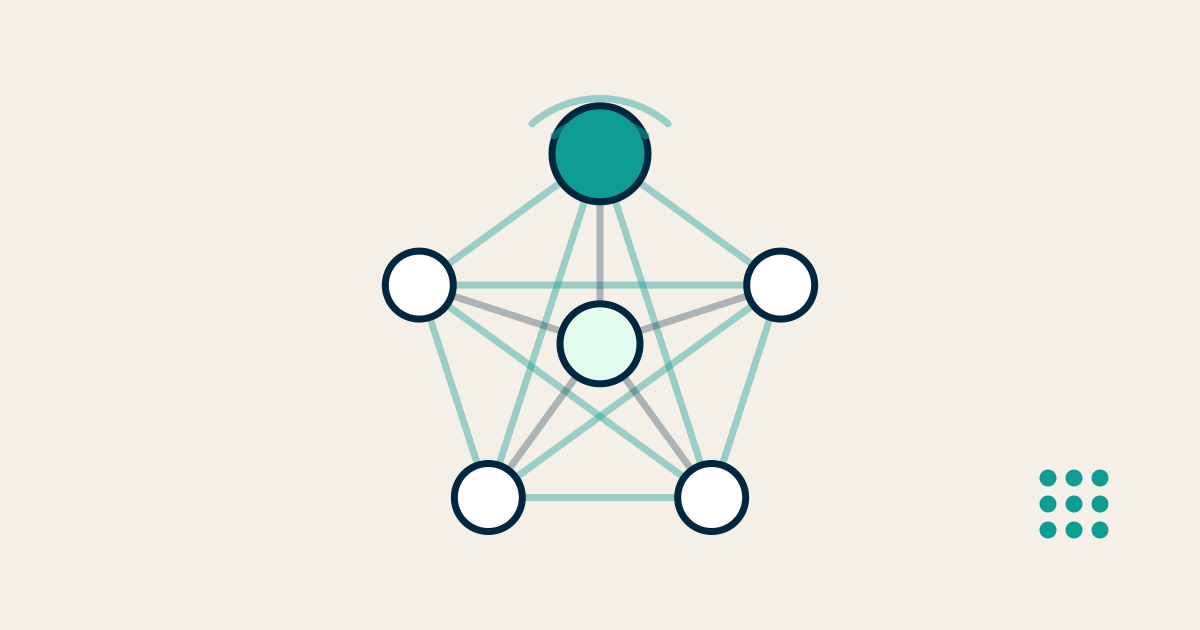
The real purpose of the visibility audit is attribution: establishing where leads originate before you can track what happens to them. If you cannot answer "did this lead come from organic search, the Google Business listing, or a referral?" you cannot locate the gap. You are auditing in the dark.
Lead Capture Is a Data Problem, Not a Volume Problem
Most businesses want more leads. The more useful question is what their current leads are telling them.
When a prospect contacts a Kitchener dental practice or a Waterloo B2B software firm, they almost always signal intent: urgency, service type, budget range, how they found the business. Almost none of this gets captured systematically. The typical intake form asks for a name, an email, and "how can we help?" which gives you nothing to triage on.
Before increasing lead volume, fix lead data. Restructure intake forms to capture qualification signals and connect them to a CRM that tags the lead automatically rather than adding it to an undifferentiated pile.
The uncomfortable claim: if your CRM shows "new lead" without a quality tag attached at the point of capture, you do not have a CRM system. You have a contact list with a monthly subscription fee.
Nurture Sequences Are Built for the Wrong Stage
Email drip campaigns are the most common fix businesses buy for a problem they do not actually have yet. Most KWC businesses with a genuine automation gap are not losing leads because they fail to nurture them over six weeks. They are losing leads in the first 48 hours because no one responded.
We build nurture sequences, but only after fixing the response layer. A five-email onboarding sequence does not matter if the lead went cold three days before email one arrived.
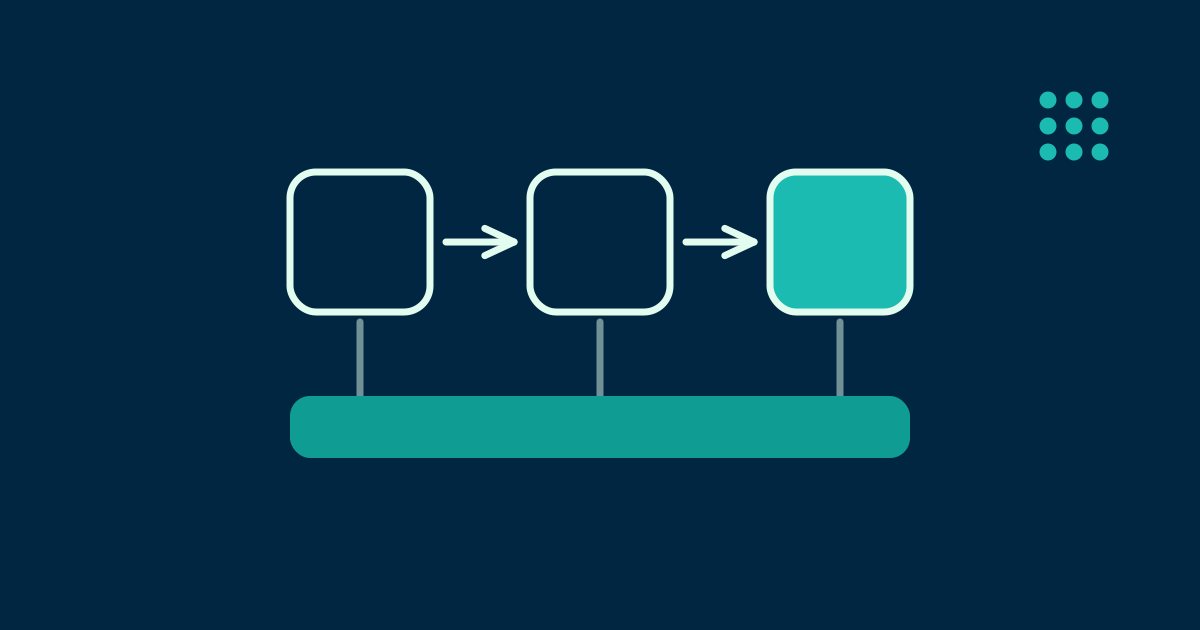
The sequencing is: response automation first, then qualification, then nurture, then re-engagement. Almost every automation strategy we inherit from a previous agency has these in the wrong order. The agency built what was easiest to demo, not what the client's funnel actually needed.
The Human Handoff Is Where Predictable Revenue Is Built
This is the step most marketing frameworks skip because it crosses into operations, which most agencies do not want to touch.
The transition from a qualified digital lead to a live sales conversation is the highest-leverage point in the funnel. It is also the point most likely to fail silently. The lead exists in the CRM, it is technically "in the pipeline," but no one has spoken to them, and the probability of closing is dropping every hour.
In B2B services across the Waterloo Region manufacturing corridor and professional services firms in Cambridge, where sales cycles are longer and trust-building carries real weight, this handoff quality is often the actual differentiator. Not the product, not the price, not the campaign creative.
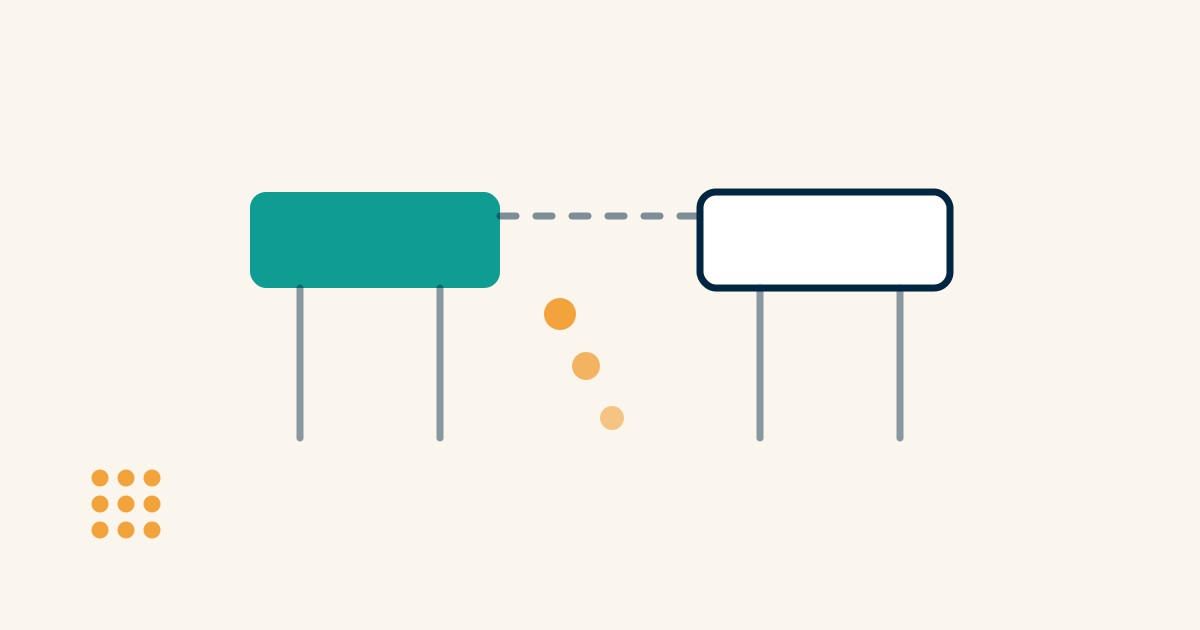
A properly structured handoff: when a lead scores above a defined threshold based on intake data, an alert goes to a specific named person, not a shared team inbox, with the qualification data already summarized. The salesperson's first call is informed, not exploratory. The lead's time is respected. The conversion rate reflects it.
CRM Structure Is the Audit, Not the Solution
The final checkpoint is the CRM itself, and the question is not "do you have one?" but "does it show you where deals are dying?"
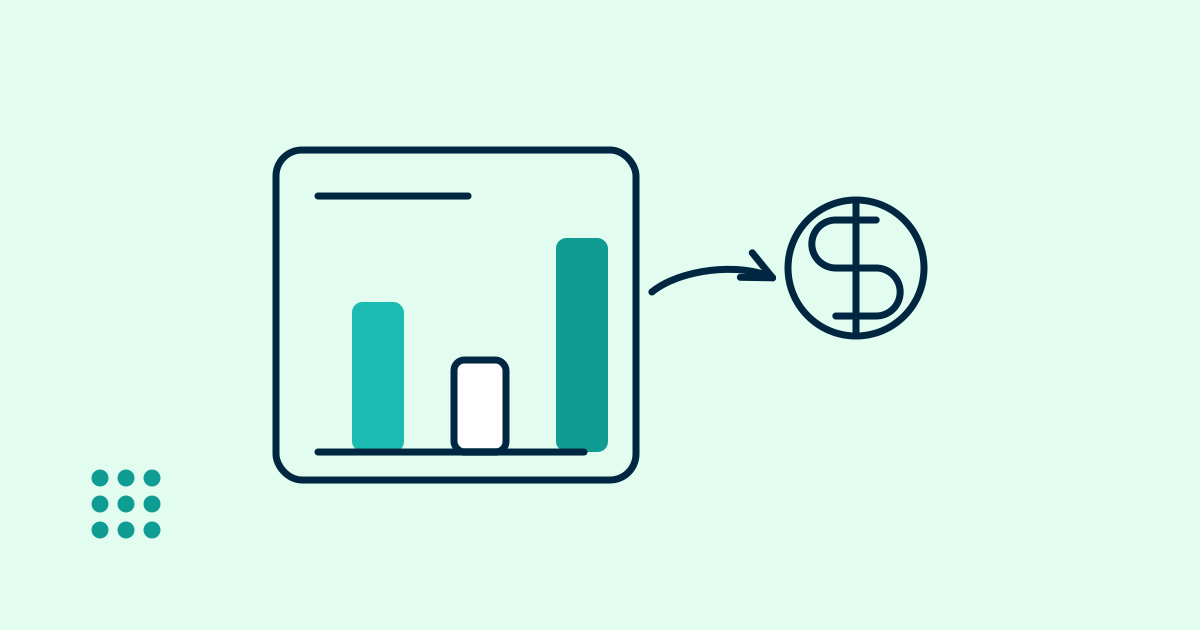
A CRM that cannot surface average time-to-first-contact, lead source by conversion rate, and funnel drop-off by stage is not functioning as a diagnostic tool. It is a database. The practical test: can you run a 90-day revenue retrospective right now? Which lead source produced the highest-value closed deals? Which funnel stage lost the most qualified leads?
If those questions take more than ten minutes to answer, the automation gap is structural, not just tactical.
Run This as a Self-Audit Before Spending Anything Else
Pull your last 30 leads. For each one, note:
- Time between lead capture and first human contact
- Whether qualification data was attached before the first call
- Current status, specifically how many are open, uncontacted, or marked "follow up later" without a date
If those three questions produce answers you are not comfortable with, the gap is in your conversion layer, not your visibility layer. Fixing it does not require a new tool or a larger ad budget. It requires mapping the handoff and building a repeatable system around it.
Once that layer is working, every dollar already spent on Google Ads, local SEO, and the Google Business Profile starts returning what it should have been returning all along.
Book a strategy call at qaurus.co/contact.